Understanding Oestrogen Dominance pt.1.
Why It Matters
When I talk about oestrogen dominance, I’m referring to a hormonal imbalance that occurs when the body has more oestrogen than it can properly balance with progesterone. This can happen if we produce too much oestrogen, are exposed to it through environmental chemicals, or don’t make enough of the hormones that keep things steady.
From my experience in clinic, this imbalance can affect everything from mood and sleep to menstrual health and fertility. Many women I see don’t realise how common this is — or how reversible it can be once we start addressing the underlying causes.
Recognising the Signs
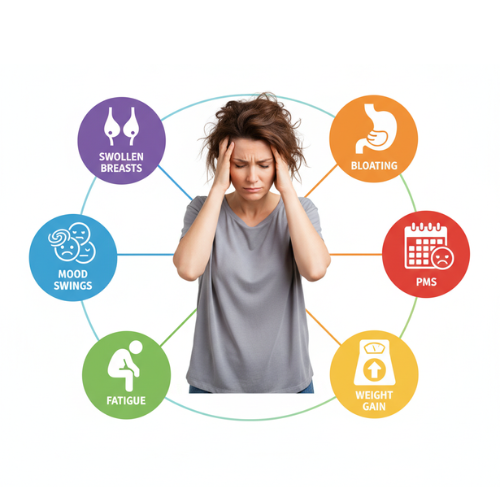
Symptoms vary from person to person, but some of the most common include:
- Tender or swollen breasts
- Irritability, anxiety, or mood swings
- Fatigue and sluggishness
- Fluid retention and bloating
- PMS or painful periods
- Weight gain, especially around the hips and thighs
- Reduced libido
- Difficulty sleeping
- Heavier or clotty periods
- Fibroids or ovarian cysts
If a few of these sound familiar, it might be time to take a closer look at your hormone balance.
Why Oestrogen Can Become Dominant
There are a few key factors I see again and again in practice:
1. Stress and blood sugar imbalance
Stress hormones such as cortisol interfere with the delicate hormonal network, impacting progesterone, thyroid function, and even ovulation.
2. The Pill and HRT
Hormonal contraception stops ovulation — and no ovulation means no progesterone. Hormone replacement therapy (HRT) can also introduce synthetic oestrogens that are harder for the body to clear.
3. Liver overload
Your liver is responsible for breaking down excess oestrogen, but it struggles to do this when overloaded by alcohol, caffeine, or processed foods.
4. Body fat and diet
Fat cells produce oestrogen, so carrying excess weight can naturally raise levels. A diet low in nutrients like B vitamins, magnesium, and zinc also makes oestrogen harder to metabolise.
5. Xenoestrogens
These synthetic, oestrogen-like chemicals mimic hormones in the body and are found in plastics, non-stick cookware, personal care products, and even the water supply.
Coming Next: How to Rebalance Naturally
In part two, I’ll share how Chinese medicine understands oestrogen dominance, and how acupuncture, herbs, and simple lifestyle changes can help you restore balance and feel like yourself again.


