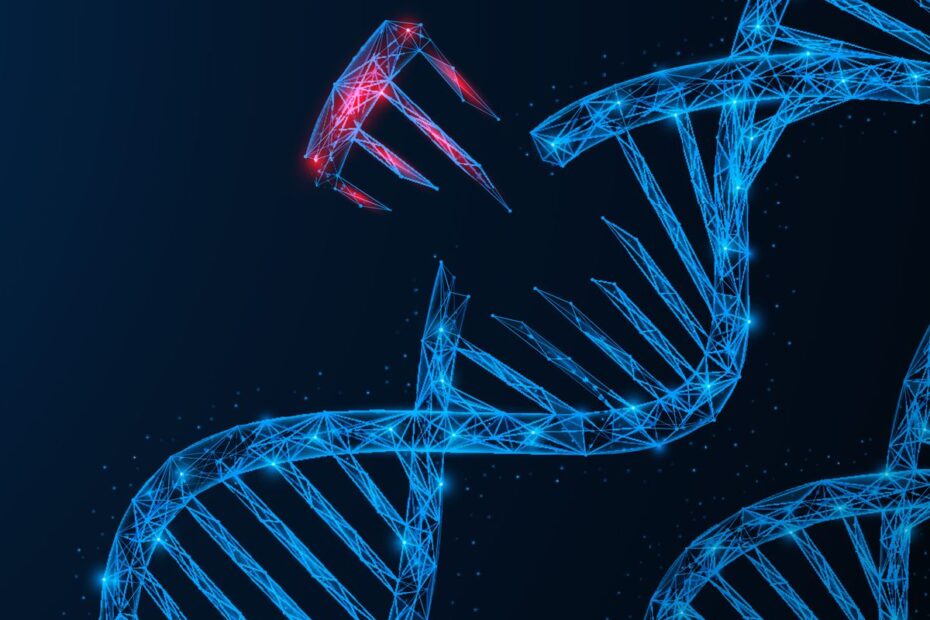
If you’ve had a sperm DNA fragmentation test, you’ve probably been handed a single number — the DNA Fragmentation Index, or DFI. It’s a useful figure, but it hides something important. That one number treats all DNA damage as the same, when in fact there are two quite different kinds of break, with different causes, different prognoses, and potentially very different implications for conception and pregnancy.
For couples dealing with unexplained recurrent miscarriage or repeated IVF disappointment despite an apparently “normal” semen analysis, understanding this distinction can help make sense of results that otherwise seem to contradict each other. Here’s what the current evidence shows.
First, what is sperm DNA fragmentation?
Every sperm carries a tightly packaged copy of the father’s DNA — a long double-stranded molecule wound into an extraordinarily compact bundle. “Fragmentation” simply means there are breaks in that molecule. A modest amount is normal, whereas higher levels have been associated with reduced fertility and poorer reproductive outcomes.
The crucial point is that the double helix can be damaged in two different ways, and they are not biologically equivalent.
The two kinds of break
Single-strand breaks (SSBs) are nicks affecting just one of the two DNA strands. The complementary strand remains intact.
Double-strand breaks (DSBs) are cuts across both strands at roughly the same point, severing the DNA molecule. There is no intact strand left to serve as a template for straightforward repair.
This isn’t simply a technical distinction. Research over the past decade suggests these two forms of damage arise through different biological mechanisms, are repaired differently after fertilisation, and are associated with different reproductive outcomes [1].
Where they come from
Single-strand breaks are thought to arise predominantly from oxidative stress. Reactive oxygen species can damage sperm DNA during maturation and storage, with contributing factors including infection, varicocele, smoking, heat exposure, obesity, environmental toxins, and advancing age. Defective chromatin packaging and incomplete apoptotic processes may also contribute, but oxidative stress is considered the principal mechanism [1].
Double-strand breaks appear to have a different origin. Current evidence suggests they are more commonly associated with defects arising during spermatogenesis itself, particularly during the extensive chromatin remodelling that occurs as sperm mature. During this process, sperm DNA is deliberately cut and rejoined to allow the DNA to become tightly compacted. If these breaks are not correctly repaired, or if the normal quality-control mechanisms fail to eliminate defective sperm, double-strand breaks may persist [1]. In other words, DSBs are thought to reflect problems with DNA packaging and sperm development rather than damage acquired later through oxidative stress alone.
What happens after fertilisation
One aspect of this biology often surprises people. Once a sperm fertilises an egg, the egg’s own repair machinery attempts to repair damage within the sperm DNA. This is a normal part of early embryonic development. It isn’t something a woman consciously does, nor does it shift responsibility for sperm DNA damage onto her. It is simply part of how the maternal and paternal genomes are integrated after fertilisation.
The two types of DNA damage respond quite differently to this repair process.
- Single-strand breaks are generally considered more amenable to repair because the complementary DNA strand provides an intact template that can guide accurate repair.
- Double-strand breaks are considerably more challenging to repair. Because both strands are disrupted, repair relies on more complex cellular pathways that are potentially more error-prone and may introduce additional genetic changes [1].
In other words, the type of sperm DNA damage is one important determinant of how successfully repair can occur after fertilisation. This helps explain why reducing DNA damage before conception is considered preferable to relying on post-fertilisation repair mechanisms.
A brief word on age, because it often becomes part of this discussion. Oocyte DNA repair capacity appears to decline with advancing maternal age, although it varies considerably between individuals. This is a normal aspect of reproductive biology rather than a failing or something anyone should feel responsible for. It is one reason why sperm DNA results should always be interpreted within the wider context of the couple’s overall fertility.
What each type means for fertility
When the available evidence is considered together, a consistent pattern begins to emerge [1,2].
Single-strand-dominant damage has been more closely associated with reduced natural fertility and longer time to conception. Because it is largely linked to oxidative stress, it may respond to improvements in underlying health and lifestyle where appropriate. Any remaining single-strand damage may also be repaired after fertilisation, provided oocyte repair capacity is sufficient.
Double-strand-dominant damage has been repeatedly associated with recurrent pregnancy loss and repeated implantation or IVF/ICSI failure [2,3]. This can be confusing for couples because sperm carrying double-strand breaks may still fertilise an egg and support early cell division. Difficulties may only become apparent as embryonic development becomes increasingly dependent on the integrity of the paternal genome, potentially resulting in implantation failure or early miscarriage [3].
Importantly, ICSI bypasses many barriers to fertilisation by injecting a single sperm directly into the egg, but it does not repair DNA damage present within that sperm. Repair still depends on the oocyte’s own repair mechanisms after fertilisation. Consequently, a substantial burden of double-strand damage may remain clinically relevant despite successful fertilisation [1].
Why a standard test can miss this
This is perhaps the most important practical point. The most commonly used sperm DNA fragmentation tests—including SCSA (which generates the DFI), TUNEL, and the sperm chromatin dispersion (Halosperm) test—measure overall DNA fragmentation. In routine clinical practice they generally cannot distinguish between predominantly single-strand and double-strand damage [4].
This has important implications.
- A normal or borderline DFI may mask clinically significant double-strand DNA damage, particularly in couples experiencing recurrent miscarriage.
- Conversely, a raised DFI caused predominantly by oxidative single-strand damage may carry a different prognosis and may be more amenable to intervention.
One of the few techniques capable of distinguishing these different patterns of DNA damage within individual sperm is the two-tailed (2T) comet assay, developed by researchers in Barcelona [2,4]. Another research marker, γH2AX, is also used to identify double-strand DNA breaks. Although these specialised investigations are not routinely available, they may be worth discussing with a fertility specialist when recurrent miscarriage or repeated assisted reproduction failure remains otherwise unexplained.
What can actually be done?
Because the two types of DNA damage appear to arise through different mechanisms, they require somewhat different approaches.
Where damage is predominantly oxidative (single-strand), reducing oxidative stress becomes the priority. Stopping smoking, moderating alcohol intake, maintaining a healthy weight, avoiding excessive testicular heat, and ensuring infections or a varicocele are appropriately assessed and managed are all sensible measures that support general reproductive health [1]. Where double-strand damage predominates, these lifestyle measures may still benefit overall sperm health, but they are unlikely to represent the whole solution. Instead, management is more likely to involve specialist assessment and discussion of the most appropriate assisted reproduction strategy. Some fertility specialists may also discuss whether the source of sperm used during treatment could influence outcomes, although this remains an individual clinical decision.
At present, evidence for interventions that specifically reduce double-strand DNA damage remains relatively limited, and management is largely guided by the underlying clinical context rather than by a single test result alone.
None of this replaces individual medical advice. Sperm DNA testing should always be interpreted alongside the broader clinical picture, including female age, ovarian reserve, embryo quality, reproductive history, and other recognised fertility factors.
The takeaway
The DNA Fragmentation Index is an important starting point, but it does not tell the whole story. Two men with the same overall DFI may have different reproductive prognoses if the underlying pattern of DNA damage differs, although female age, embryo quality and the couple’s wider reproductive health remain critically important. For couples experiencing recurrent miscarriage or repeated IVF failure that standard investigations cannot explain, asking about the type of sperm DNA damage—not simply the amount—may be a worthwhile discussion with a fertility specialist.
This article is intended for general education and information only. It should not be used as a substitute for personalised medical advice, diagnosis or treatment. Decisions about testing and fertility treatment should always be made in consultation with an appropriately qualified fertility specialist.
References
- Ribas-Maynou J, Benet J. Single and double strand sperm DNA damage: different reproductive effects on male fertility. Genes (Basel). 2019;10(2):105. doi:10.3390/genes10020105
- Ribas-Maynou J, García-Peiró A, Fernández-Encinas A, et al. Double stranded sperm DNA breaks, measured by comet assay, are associated with unexplained recurrent miscarriage in couples without a female factor. PLoS One. 2012;7(9):e44679. doi:10.1371/journal.pone.0044679
- Casanovas A, Ribas-Maynou J, et al. Double-stranded sperm DNA damage is a cause of delay in embryo development and can impair implantation rates. Fertil Steril. 2019;111(4):699–707. doi:10.1016/j.fertnstert.2018.11.035
- Ribas-Maynou J, García-Peiró A, Abad C, et al. Comprehensive analysis of sperm DNA fragmentation by five different assays: TUNEL assay, SCSA, SCD test and alkaline and neutral comet assay. Andrology. 2013;1(5):715–722. doi:10.1111/j.2047-2927.2013.00111.x
- Ribas-Maynou J, Yeste M. Oxidative stress in male infertility: causes, effects in assisted reproductive techniques, and protective support of antioxidants. Biology (Basel). 2020;9(4):77. doi:10.3390/biology9040077